
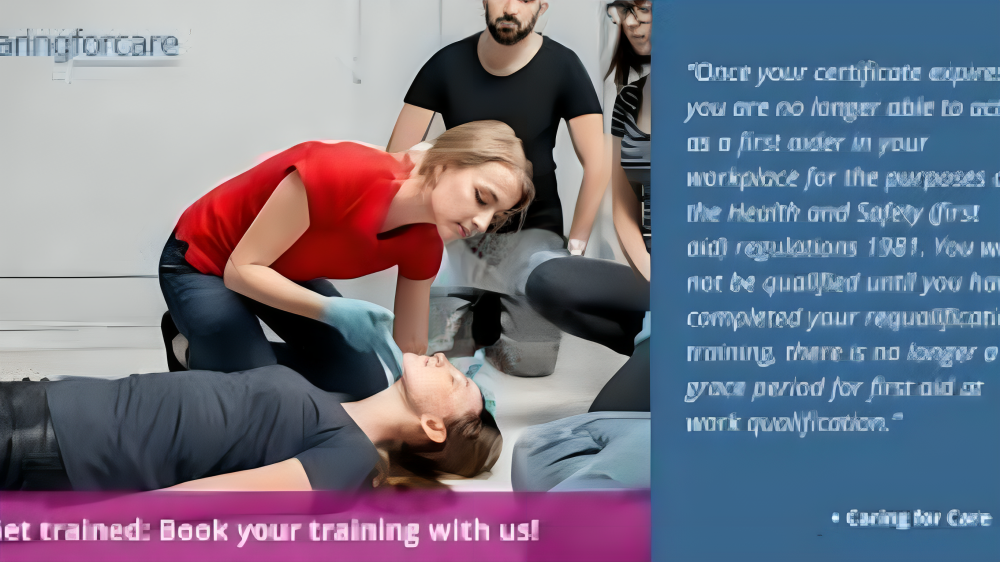
Would Your Team Know What to Do If Someone Collapsed at Work?
Emergencies strike without warning. A colleague could suddenly collapse from cardiac arrest, a worker could suffer a severe cut from machinery, or someone could begin choking in the break room. In those critical moments, the outcome depends on one thing: whether someone nearby knows what to do.
A certified first aider in the workplace isn’t a bonus; it’s a necessity. Trained individuals can respond quickly, stabilize the situation, and often prevent a crisis from becoming fatal. With modern training options, businesses can have certified first aiders ready in just two days. In France, this typically aligns with the Sauveteur Secouriste du Travail (SST) pathway delivered by trusted providers such as 1Formation SST.
This blog explores why every workplace should have at least one certified first aider, what the training involves, and how your team can be prepared by the end of the week.
What a Certified First Aider Does and Why Their Presence Saves Lives
A certified first aider is an employee who has received formal training to respond to medical emergencies before professional help arrives. Their job is not to replace paramedics or doctors but to provide immediate care that can keep a person alive or prevent further harm.
They are the first line of defense in emergencies such as:
- Cardiac arrest: Applying CPR and using an AED until the ambulance arrives
- Choking: Performing abdominal thrusts to clear the airway
- Severe bleeding: Applying pressure and dressings to control blood loss
- Unconsciousness: Placing someone in the recovery position while monitoring breathing
Having someone on-site with this training means the clock doesn’t tick helplessly while waiting for an ambulance. A certified first aider, trained through trusted providers like 1FormationSST, becomes a critical asset in those first few minutes of an emergency.
What the Law Requires and Why Compliance Is Non-Negotiable
Across most countries, workplace health and safety laws require employers to provide appropriate first aid arrangements. This includes having trained personnel who can respond to emergencies on-site.
In France, under the Code du Travail, employers must assess workplace risks and ensure that workers have access to immediate first aid. This usually includes:
- A minimum number of trained first aiders, based on workplace size and risk
- Adequate first aid kits are placed across the premises
- Clearly designated individuals responsible for first aid response
Typically, for every 20 to 50 employees, there should be at least one certified first aider, depending on the type of work involved. In high-risk environments like construction or manufacturing, the ratio should be lower.
Failure to meet these standards can result in:
- Fines and legal penalties
- Workplace shutdowns
- Increased liability during injury investigations
- Negative audits or insurance complications
Workplace safety isn’t optional. It is a legal, financial, and moral responsibility.
Six Reasons Every Business Needs a Certified First Aider
- Faster Emergency Response: Immediate help minimizes damage and can save lives, especially in time-sensitive cases like cardiac arrest or choking.
- Lower Injury Severity: Quick action often reduces the severity of injuries, shortens recovery times, and avoids long-term damage.
- Improved Team Morale and Confidence: Employees feel safer and more valued when they know trained help is always nearby.
- Stronger Legal Compliance: Meets national and local requirements for workplace safety, reducing the risk of fines and legal action.
- Better Business Reputation: Demonstrates a commitment to employee well-being, which clients, customers, and investors take seriously.
- Operational Resilience: Trained staff reduce disruptions during emergencies, leading to lower downtime and quicker recovery.
Incidents Where First Aiders Changed the Outcome
Heatstroke at a warehouse: A worker collapsed after long hours on a hot summer day. The first aider applied cold compresses, moved the employee to shade, and monitored breathing until paramedics arrived.
Laceration on a factory floor: A worker’s arm was cut by machinery. The on-site first aider quickly applied pressure and elevated the arm, significantly reducing blood loss and preventing shock.
Choking incident in an office cafeteria: An employee began choking during lunch. A colleague trained in first aid performed abdominal thrusts, clearing the airway before emergency services were needed.
In each of these cases, having someone trained made the difference between control and chaos.
How to Train a First Aider in Two Days or Less
Many employers are surprised to learn that full certification doesn’t take weeks. In fact, most training providers can certify a first aider in under 48 hours.
Here’s a typical two-day schedule:
Day 1
- Introduction to first aid principles
- Assessing the scene and ensuring safety
- CPR techniques (adult and child)
- Use of Automated External Defibrillator (AED)
- Recovery position for unconscious patients
Day 2
- Managing wounds, cuts, and bleeding
- Burn and fracture care
- Dealing with shock, strokes, and seizures
- Realistic emergency scenarios
- Practical exam and certification
Courses are often available in multiple formats:
- In-person group sessions at training centers
- On-site workshops at your business premises
- Online theory + in-person practical hybrid formats
Training is typically valid for three years, with refresher options to keep skills sharp (see also Tarifs Formation SST for an overview of formats and planning considerations).
How Many Certified First Aiders Should You Have?
The number depends on your risk level, worksite layout, and staffing patterns.
Recommended coverage:
- Low-risk environments (offices, retail): 1 certified first aider per 50 employees
- High-risk environments (construction, factories): 1 per 25 employees
- Multi-floor or multi-shift operations: At least one trained individual per shift and per floor
You should also account for employee turnover and absences. Coverage needs to be consistent, not conditional.
Summary Snapshot for Quick Decision-Making
- First aid training can be completed in two days or less
- Immediate response reduces injury severity by as much as 50 percent
- Lack of certified first aiders can result in fines, legal issues, or failed audits
- Teams with trained first aiders feel safer, more confident, and more connected
Certify a First Aider This Week Before the Next Emergency Strikes
Emergencies won’t wait for next month. Whether you run a small office or a large industrial site, training one or more team members in first aid is one of the simplest and smartest decisions you can make for business safety.
If you’re looking to certify your team fast, 1Formationsst offers expert-led sessions that get your team ready in 48 hours or less. Get in touch to plan your training session and stay compliant, confident, and prepared.
What’s Covered in a Certified First Aid Course
A comprehensive first aid course doesn’t just scratch the surface. It prepares individuals to take control of the most common and dangerous workplace emergencies. While course content may vary slightly between providers, these are the essential components covered in most two-day certifications:
- CPR and AED Use:
How to perform cardiopulmonary resuscitation and safely operate an automated external defibrillator on adults, children, and infants. - Bleeding Control and Bandaging Techniques:
How to manage cuts, wounds, and major bleeding using direct pressure, dressings, and bandages. - Airway Management and Choking Response:
Procedures for clearing blocked airways in conscious and unconscious individuals. - Response to Shock and Unconsciousness:
Steps to stabilize a person experiencing shock and place unconscious individuals in a safe recovery position. - Seizure and Heart Attack Recognition:
Identifying the symptoms of seizures and heart attacks, and responding quickly while waiting for emergency services. - Scene Safety and Emergency Protocols:
How to assess the environment, ensure the safety of the responder and others, and properly report or escalate the incident.
These skills are not only relevant in the workplace but also transferable to public and home environments.
First Aiders vs Safety Officers: A Clear Role Comparison
Workplace safety often requires multiple layers of responsibility. First aiders and safety officers both contribute to a safer environment, but their roles are not interchangeable.
| Responsibility | Certified First Aider | Safety Officer |
| Primary Purpose | Immediate response to medical emergencies | Ongoing safety planning and hazard prevention |
| Daily Duties | On-call for first aid incidents | Conduct inspections, risk assessments |
| Required Training | First aid certification (2 days or less) | Occupational health and safety certifications |
| Legal Obligation | Yes, based on workforce size/risk level | Yes, for certain industries and business sizes |
| Involved in Emergency Plans | Executes during emergencies | Develops and oversees emergency plans |
Many workplaces benefit from having both roles filled. While the safety officer works on prevention, the first aider focuses on immediate response when prevention isn’t enough.
Psychological Benefits of First Aid Training in the Workplace
The impact of first aid training goes beyond physical readiness. It also changes how employees respond to stress and how they view their role in workplace safety.
- Preparedness Reduces Panic:
People who understand what to do in an emergency are less likely to freeze. They act faster and with more confidence. - Mental Readiness Improves Response Quality:
When employees have practiced emergency scenarios, their actions become second nature. This boosts the effectiveness of the entire team in high-pressure moments. - Personal Empowerment:
Employees feel more in control, not just at work but in everyday life, on public transport, at home, or in the community. - Positive Ripple Effect:
Trained staff influence others by modeling calm, assertive behavior. This spreads a mindset of preparedness and care.
How First Aid Training Builds a Culture of Safety
First aid training does more than prepare for isolated incidents. It reinforces a company-wide commitment to safety and well-being.
Developing Safer Habits: Training increases awareness of risks. Employees begin to notice and report hazards more quickly, reducing accidents over time.
Encouraging Peer Accountability: When teams know someone is watching out for their safety, they’re more likely to take responsibility for each other and for themselves.
Building Stronger Trust Among Colleagues: Knowing that a teammate can step in during an emergency builds stronger relationships and mutual respect across the team.
Safety becomes not just a rulebook but part of the workplace identity.
Frequently Asked Questions
Is it mandatory to have a certified first aider at work?
Yes, most countries legally require workplaces to have trained first aiders on-site. The specific number depends on your industry and staff size.
What’s the fastest way to train a first aider?
Two-day intensive courses offer full certification, with some providers offering blended formats (online + in-person) to make training more flexible.
How long does the certification last?
Most first aid certifications are valid for three years. Refresher training is recommended after that period or sooner if skills fade.
What’s the cost of training a first aider?
Pricing varies by provider and location. Group discounts are often available for businesses certifying multiple employees.
How often should first aid training be refreshed?
Best practice is every three years, though high-risk environments may require more frequent updates or scenario-based refreshers.
Can small businesses afford this?
Yes. Many affordable training options exist for small teams. Some providers even offer on-site sessions tailored to the company’s specific needs.