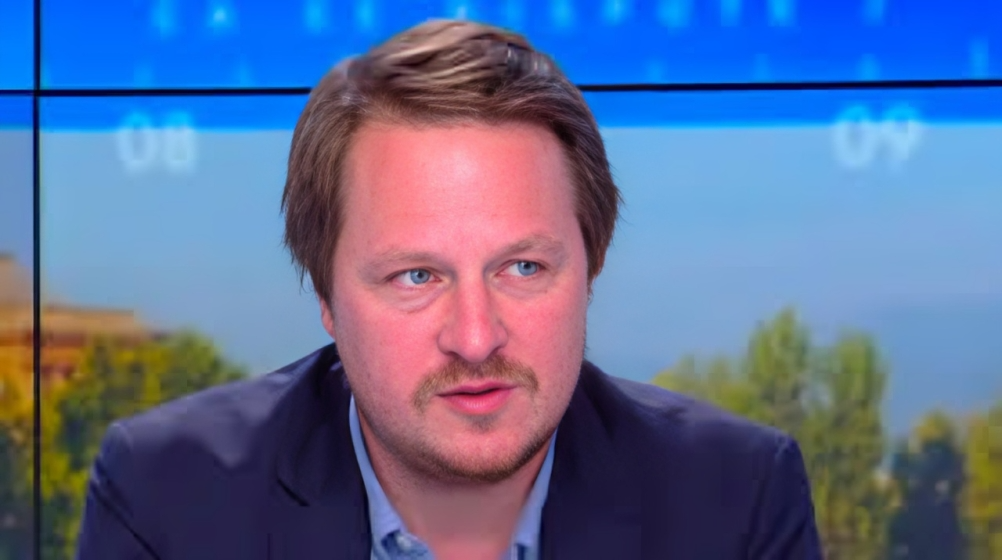
Geoffroy Lejeune has emerged as one of France’s most discussed media figures in recent years. Born in 1988, this journalist now serves as editor-in-chief of Le Journal du Dimanche, the country’s premier Sunday newspaper. His career spans traditional reporting and bold political commentary, often marked by sharp debates over editorial direction. From early stints at respected outlets to leading influential publications, Geoffroy Lejeune’s journey highlights shifting dynamics in French media. Readers seeking general knowledge about contemporary journalism find his story particularly revealing, as it touches on ambition, controversy, and the power of the press.
Early Life and Education
Geoffroy Lejeune was born on September 3, 1988, in Avignon, France. He spent part of his childhood in the historic city and attended a secondary school connected to traditionalist Catholic circles. At age 15, he formed a lasting friendship with Marion Maréchal, a future political figure who later became a mentor in his eyes. Geoffroy Lejeune pursued higher education first with a law degree at Aix-Marseille University, then enrolled at the prestigious École Supérieure de Journalisme de Paris. He graduated in 2011, equipped with both legal knowledge and professional training. This foundation shaped his analytical approach to politics and reporting, setting the stage for a fast-tracked career in journalism.
Breaking into the Media World
Geoffroy Lejeune entered journalism at age 24, joining Le Point magazine in 2012 to cover the presidential election with a focus on the far-right spectrum. Colleagues noted his specialized interest rather than broad investigative work. During this period, he also served as a parliamentary assistant to a center-right deputy, gaining insider insight into French politics. Geoffroy Lejeune quickly built a network, appearing as a commentator on shows like those hosted by Bruno Roger-Petit and later on Public Sénat, Europe 1, and LCI. These early experiences honed his skills in live debate and political analysis. By 2013, his growing profile led him to a new opportunity that would define the next decade of his professional life.
Rapid Rise at Valeurs Actuelles
In June 2013, Geoffroy Lejeune joined Valeurs Actuelles as deputy political editor. He advanced to political editor in 2015 and became director of the editorial staff in 2016 at just 27 years old, making him the youngest person to hold that role in France. Under his leadership, the magazine adopted a more provocative and polemical tone, emphasizing investigative pieces and right-wing perspectives. Geoffroy Lejeune hired young talent, including his brother Bastien as political editor, and expanded the publication’s reach. Subscriber numbers and digital traffic fluctuated, but his influence transformed Valeurs Actuelles into a platform known for strong opinions on immigration, identity, and national politics.
Editorial Style and Notable Controversies
Geoffroy Lejeune’s tenure at Valeurs Actuelles featured bold editorial choices that often sparked public outcry. In 2020, the magazine published a fictional story depicting left-wing politician Danièle Obono as enslaved in the 18th century, leading to a racism conviction and a €1,500 fine for the publication (though Lejeune himself was later acquitted on appeal). Critics labeled the content xenophobic and identitarian. Geoffroy Lejeune defended the magazine’s commitment to free expression and investigative journalism. These incidents, combined with declining sales reported by some observers, highlighted tensions between provocative coverage and mainstream media standards. His style nonetheless attracted a dedicated audience seeking alternative viewpoints.
Political Affiliations and Literary Work
Geoffroy Lejeune has long maintained close ties to prominent right-wing figures. He counts Marion Maréchal as a mentor from his teenage years and openly supported Éric Zemmour during the 2022 presidential campaign. In 2015, he authored the political novel Une élection ordinaire, a fictional account of Zemmour winning the presidency; he later expanded it into Zemmour Président, de la fiction à la réalité. These works blended storytelling with political commentary. Geoffroy Lejeune appeared regularly as a pundit on CNews and other outlets, reinforcing his image as a voice for conservative and reactionary ideas. His writings and public stances positioned him as more than a neutral reporter in the eyes of many observers.
Appointment to Le Journal du Dimanche
In June 2023, Geoffroy Lejeune’s career took a dramatic turn when he was named editor-in-chief of Le Journal du Dimanche following the magazine’s acquisition by interests linked to businessman Vincent Bolloré. The decision triggered an unprecedented 40-day strike by JDD staff—the longest in French media history since the 1970s. Journalists protested what they viewed as a shift toward far-right influence, with many ultimately leaving the paper. Geoffroy Lejeune assumed the role in August 2023 despite the backlash. Supporters praised his journalistic credentials, while opponents raised concerns about editorial independence. The episode underscored deep divisions within France’s media landscape.
Impact on French Media Today
Since taking the helm at Le Journal du Dimanche, Geoffroy Lejeune has continued to shape national discourse. The newspaper’s coverage has reflected a clearer right-leaning orientation, including hires from previously sidelined outlets. Geoffroy Lejeune remains active on social media and television, engaging audiences with unapologetic commentary on current events. His trajectory—from young law student to influential editor—illustrates how personal convictions can drive media evolution. While polarizing, Geoffroy Lejeune’s career offers valuable lessons about ambition, controversy, and the role of outspoken journalism in democratic societies.
FAQs
Who is Geoffroy Lejeune?
Geoffroy Lejeune is a French journalist born in 1988 in Avignon. He currently serves as editor-in-chief of Le Journal du Dimanche. Known for his work at Valeurs Actuelles and strong right-wing commentary, he rose quickly through the ranks after graduating from journalism school in 2011. His career blends reporting, editing, and political analysis.
What controversies has Geoffroy Lejeune faced?
Geoffroy Lejeune’s leadership at Valeurs Actuelles included a 2020 fictional story that drew racism accusations and a court fine. His 2023 appointment to Le Journal du Dimanche prompted a lengthy staff strike and public criticism from journalists and cultural figures concerned about editorial direction.
Why did Geoffroy Lejeune leave Valeurs Actuelles?
In June 2023, Geoffroy Lejeune was dismissed from Valeurs Actuelles after disagreements with the owner over the magazine’s increasingly extreme editorial line. He was later replaced, though he contested the termination legally.
What books has Geoffroy Lejeune written?
Geoffroy Lejeune authored the 2015 political fiction Une élection ordinaire, imagining Éric Zemmour’s presidential victory. He updated and republished it in 2021 as Zemmour Président, de la fiction à la réalité.
How has Geoffroy Lejeune influenced French journalism?
Through bold editorial choices and media appearances, Geoffroy Lejeune has amplified conservative voices and challenged mainstream narratives. His moves have sparked debates on press freedom, ownership influence, and ideological balance in French media.
Conclusion
Geoffroy Lejeune’s path from Avignon student to editor of a major national newspaper reflects determination and a willingness to embrace controversy. His leadership at Valeurs Actuelles and Le Journal du Dimanche has reshaped publications while igniting debates about media independence and political influence. For anyone interested in modern French journalism, understanding Geoffroy Lejeune reveals how personal vision and public reaction continue to define the industry. His story remains a compelling case study in ambition, resilience, and the enduring power of the written word.